Public Buildings Are Not Public Everywhere: Understanding Public Forums, Limited Public Forums, and Restricted Areas
Many people assume that because taxpayers own a government building, they have the right to go anywhere inside it. In reality, the law recognizes different types of public spaces, each with different rules regarding access, speech, and recording. Understanding these distinctions can help municipalities protect their facilities while respecting constitutional rights.

One of the most common misconceptions about government buildings is that they are entirely "public" simply because they are owned by the government. That is simply not how the law works.
Town halls, highway garages, county offices, police stations, and other municipal buildings exist to serve the public, but they also function as workplaces. Employees need secure areas to conduct business, protect records, maintain equipment, and perform essential government functions. The fact that a building is publicly owned does not mean every room, hallway, or office is open to unrestricted public access. Understanding the different types of public spaces can help municipal officials establish appropriate policies while respecting the constitutional rights of visitors.
Traditional Public Forums
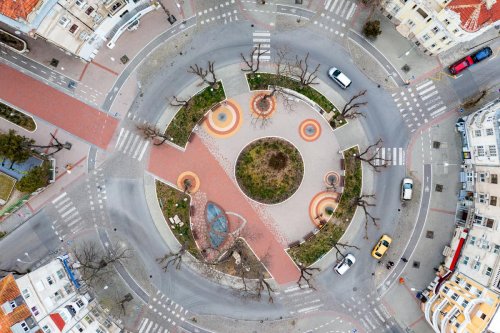
Some places have historically been recognized as areas where First Amendment protections receive the highest level of constitutional protection. Examples include public sidewalks, parks, and many public streets. These are locations where people have long exercised rights such as speaking, protesting, distributing literature, and gathering peacefully. Government restrictions in these locations are subject to the highest level of legal scrutiny.
For municipal employees, this generally means that someone standing on a public sidewalk outside town hall may have broad rights to photograph, record video, or express opinions, provided they are not violating other laws or interfering with public safety.
Limited Public Forums
Many government buildings contain areas that are open to the public, but only for specific purposes.
Examples include:
-
Town hall lobbies
-
Clerk's offices
-
Building department counters
-
Tax collection offices
-
Permit windows
-
Public meeting rooms during scheduled meetings
These spaces exist so members of the public can conduct government business. That does not mean visitors may use these areas for any activity they choose. Municipalities may generally impose reasonable, viewpoint-neutral rules that help ensure government services can continue efficiently. For example, a municipality may establish reasonable rules regarding waiting lines, business hours, access to service counters, or disruptive behavior. Employees may ask visitors to leave if they interfere with normal operations, regardless of whether they are carrying a camera.
Nonpublic or Restricted Areas
Many portions of municipal buildings are not open to the general public at all.
These areas often include:
-
Employee offices
-
Highway garages
-
Maintenance shops
-
Equipment storage buildings
-
Dispatch centers
-
Records storage rooms
-
Break rooms
-
Mechanical rooms
-
Server rooms
-
Evidence rooms
-
Employee-only hallways
The government has considerably greater authority to restrict access to these spaces because they are intended for employees and authorized personnel, not for general public use. Someone cannot simply wander into a highway garage, walk through a records room, or enter an employee workspace merely because the building is owned by taxpayers. This is where good facility management becomes especially important.
Good Signage Eliminates Confusion
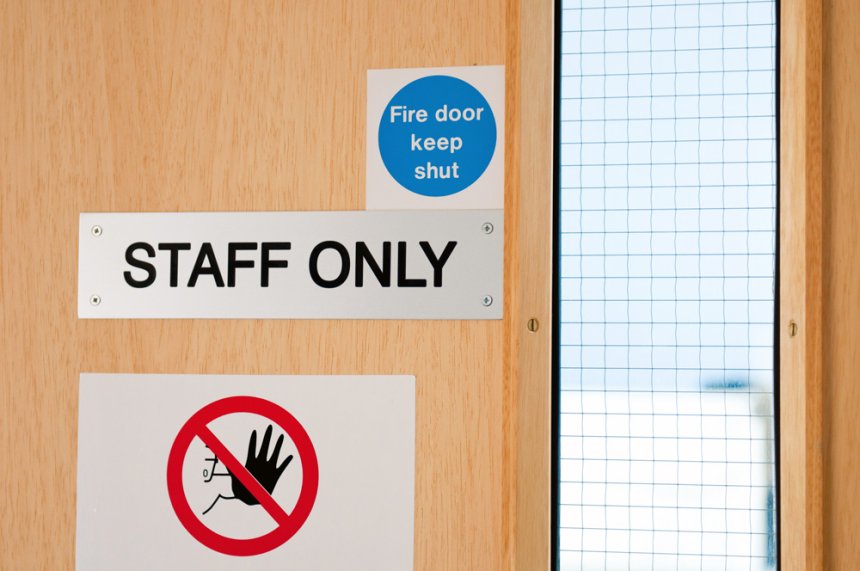
One of the simplest ways to protect municipal facilities is through clear signage.
Signs such as:
-
Employees Only
-
Authorized Personnel Only
-
Public Access Ends Here
-
Restricted Area
-
No Public Access Beyond This Point
help establish clear boundaries for visitors. These signs are not intended to suppress constitutional rights. Instead, they communicate where the public is and is not permitted to go. When boundaries are clearly marked, employees have a much easier time directing visitors appropriately, and misunderstandings become less likely.
Cameras Do Not Change the Rules
Occasionally, municipal employees become so focused on the presence of a camera that they lose sight of the actual issue. The camera is often irrelevant. If a visitor remains in an area open to the public and follows applicable rules, the mere fact that they are recording does not automatically justify removing them. On the other hand, if that same visitor enters an employee-only area without authorization, refuses to leave a restricted workspace, or disrupts government operations, the issue is no longer about recording. It is about unauthorized access or disruptive conduct.
Focusing on behavior rather than the camera helps municipalities respond consistently and lawfully.
Every Employee Should Know the Boundaries
Municipal employees should understand which portions of their facility are intended for public access and which are not. They should also know who has authority to address access issues and what procedures should be followed if a visitor refuses to comply with reasonable restrictions. These discussions are especially valuable before an incident occurs. A short training session can help employees respond calmly and consistently rather than making decisions under pressure.
Public Ownership Does Not Mean Unlimited Access
Government belongs to the people, and transparency is an important part of maintaining public trust. At the same time, municipalities have a legitimate responsibility to protect employees, sensitive information, expensive equipment, and the uninterrupted delivery of public services.
Those goals are not contradictory. A well-managed municipal building welcomes the public where public business is conducted, while clearly protecting the areas where employees need to work safely and efficiently. Understanding the distinction between traditional public forums, limited public forums, and restricted areas helps municipalities strike that balance. It protects constitutional rights without sacrificing common sense, security, or the ability of government employees to do the jobs the public has entrusted them to perform.